
How Much Does It Cost to Build a Custom Home in BC?
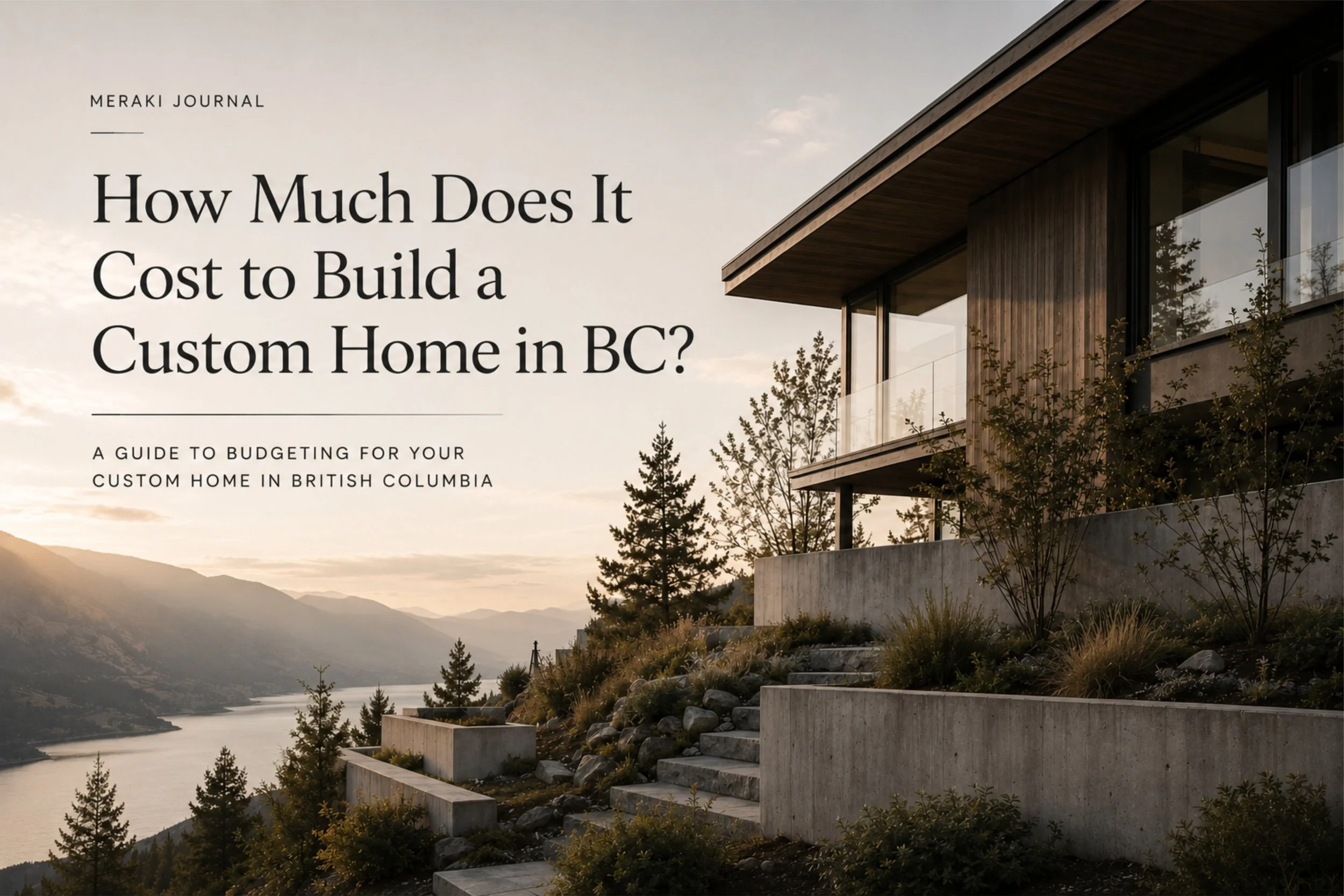
It's the first question almost everyone asks. And it's the question that's hardest to answer honestly — not because designers and builders are being evasive, but because the real answer is genuinely complex. A number pulled from a website or a conversation with a neighbour who built five years ago can do more harm than good if it sends you into the process with the wrong expectations.
Here's what we actually know about custom home construction costs in British Columbia — and more importantly, how to think about your budget before you commit to anything.
Why the number varies so much
Custom home construction costs in BC are typically quoted in dollars per square foot. Across the province right now, that range runs from approximately $350 per square foot at the entry level of custom construction through to $600, $700, or beyond for highly specified, architecturally complex homes.
That's not a range designed to avoid the question. It's a range that reflects reality. A 3,000 square foot home built to a mid-range specification on a flat, serviced lot is a fundamentally different project — in cost, complexity, and risk — than a 3,000 square foot home on an exposed hillside site with floor-to-ceiling glazing, a cantilevered deck, imported stone cladding, and a fully automated home system.
Same square footage. Potentially double the cost.
Understanding what drives that variation is more useful than any single number we could give you.
How location within BC affects your budget
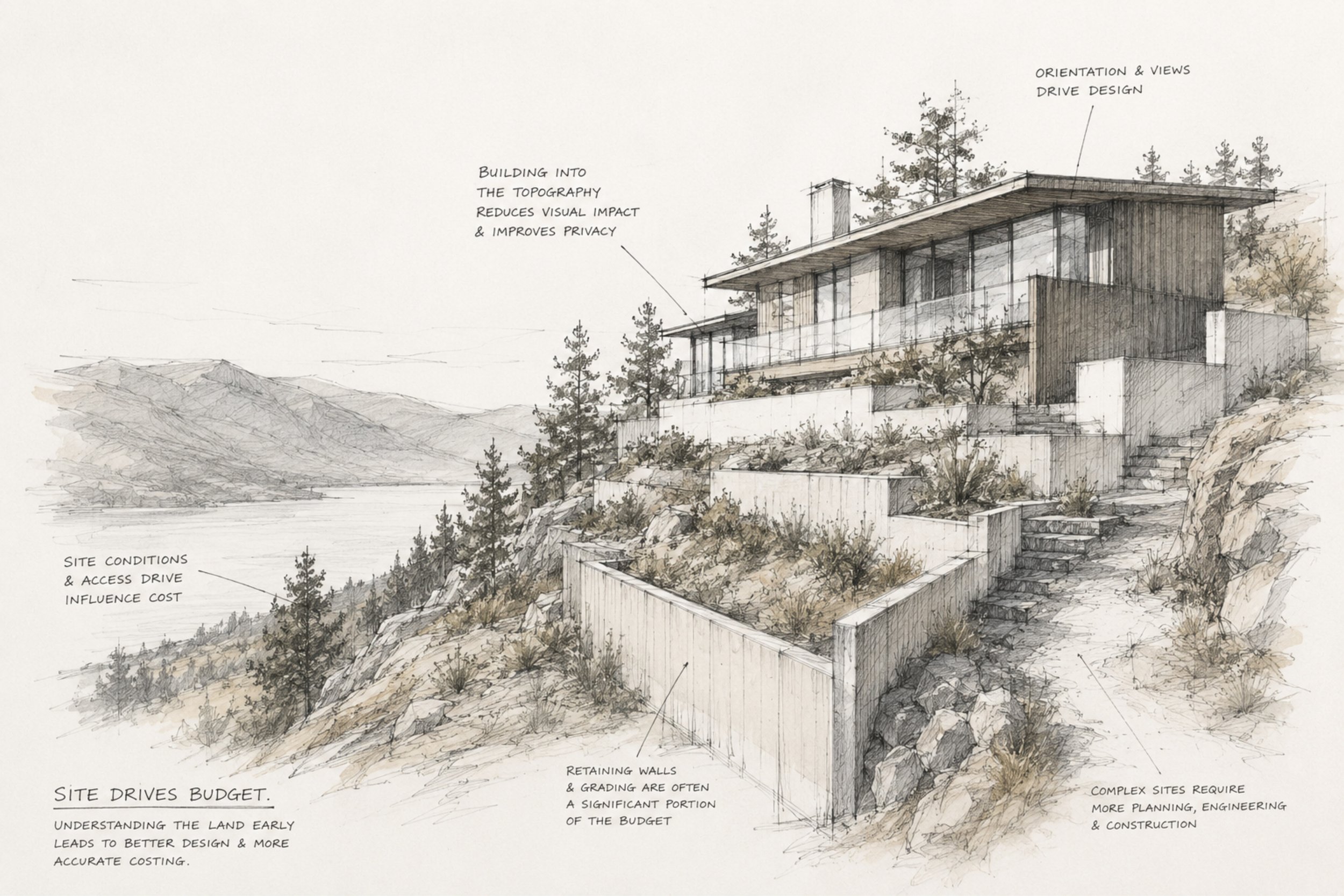
Before we get into the line items, it's worth acknowledging that where you're building in BC has a significant effect on what you'll pay — and not always in the ways people expect.
Building in the Okanagan, on Vancouver Island, in the Kootenays, or in a more remote rural location each comes with its own distinct cost profile. Trade availability, material logistics, site conditions, and regional demand all factor into what a contractor will charge for the same scope of work in different parts of the province.
On Vancouver Island, for example, building outside the Victoria and Nanaimo corridors introduces longer material lead times and higher logistics costs. Trades are in strong demand across the island and scheduling requires more lead time than in larger centres. These realities don't make island builds more expensive across the board — but they make early, thorough planning more important.
In the Okanagan, site conditions vary dramatically. A flat, serviced lot in Vernon is a very different proposition from an exposed hillside above Kelowna or a rural acreage in the North Okanagan. The terrain, the climate considerations — including wildfire interface requirements in many areas — and the distance from major supply chains all shape what your project will cost before a single finish is selected.
In more remote areas of BC — the Shuswap, the Kootenays, the Gulf Islands — the premium for building well is real. Mobilization costs, trade availability, and material delivery all add to the budget in ways that urban or semi-urban projects don't experience. The homes that get built well in these locations are almost always the ones where the design and documentation was thorough enough that contractors could price and plan with confidence.
What actually determines what your home will cost
Your site Before a foundation is poured, your site will have already shaped your budget significantly. A flat, easily accessible, fully serviced lot is the most cost-effective starting point. A sloped site requires more complex foundation work. A remote property may require a septic system, well, and extended utility connections. A site with difficult access adds cost to every material delivery and every trade visit throughout the build.
Site costs are often underestimated because they're invisible in the early planning stages. They show up later — in the excavation quote, the foundation tender, the civil engineering fees — and they can move a budget significantly if they haven't been accounted for from the beginning.
The design itselfComplexity costs money to build. A home with a simple rectangular footprint, a straightforward roofline, and standard ceiling heights is less expensive to construct than one with multiple roof forms, varied ceiling heights, large structural spans, and extensive exterior detailing. Neither is better — they're different — but the cost difference is real and it flows directly from design decisions.
This is one of the most important reasons to work with a designer who thinks about constructability alongside aesthetics. Beautiful design and buildable design are not in conflict — but achieving both requires someone who understands construction, not just composition.
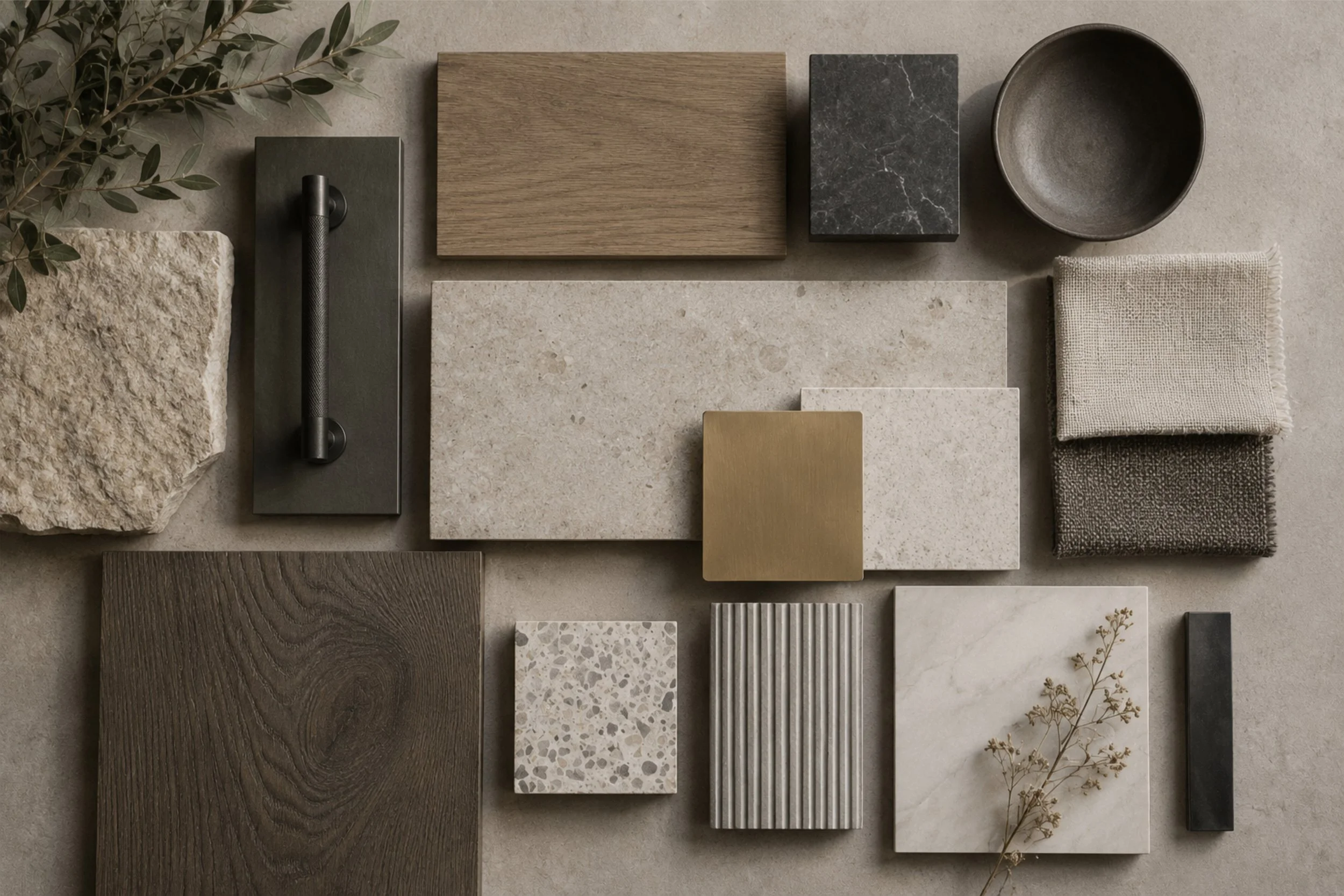
Specification level Finishes and fixtures are where budgets vary most dramatically and where the most personal decisions get made. Flooring, cabinetry, countertops, plumbing fixtures, lighting, windows, exterior cladding — every one of these has a wide range from good to exceptional, and the cumulative effect of those choices on your total budget is enormous.
A useful exercise is to walk through a home similar to what you're imagining and price the finishes you're drawn to. Most people discover their instinctive preferences sit at a higher specification level than their initial budget assumed. That's not a problem — it's useful information to have early.
Timing and market conditions Construction costs in BC have shifted significantly over the past several years and continue to move with labour availability, material costs, and broader economic conditions. A cost estimate from two years ago is not a reliable guide to what you'll pay today. Getting current numbers from active local builders — ideally through a formal tender process on a well-developed set of drawings — is the only way to know what your project will actually cost in the current market.
Soft costs The construction contract is the largest line item in your budget but it's not the only one. Soft costs — design fees, structural and civil engineering, geotechnical reports where required, surveying, permit fees, and utility connections — typically add 10 to 15 percent to the total project cost. These are real costs that belong in your budget from the beginning, not surprises to absorb later.
Where design fees fit in — and why they matter
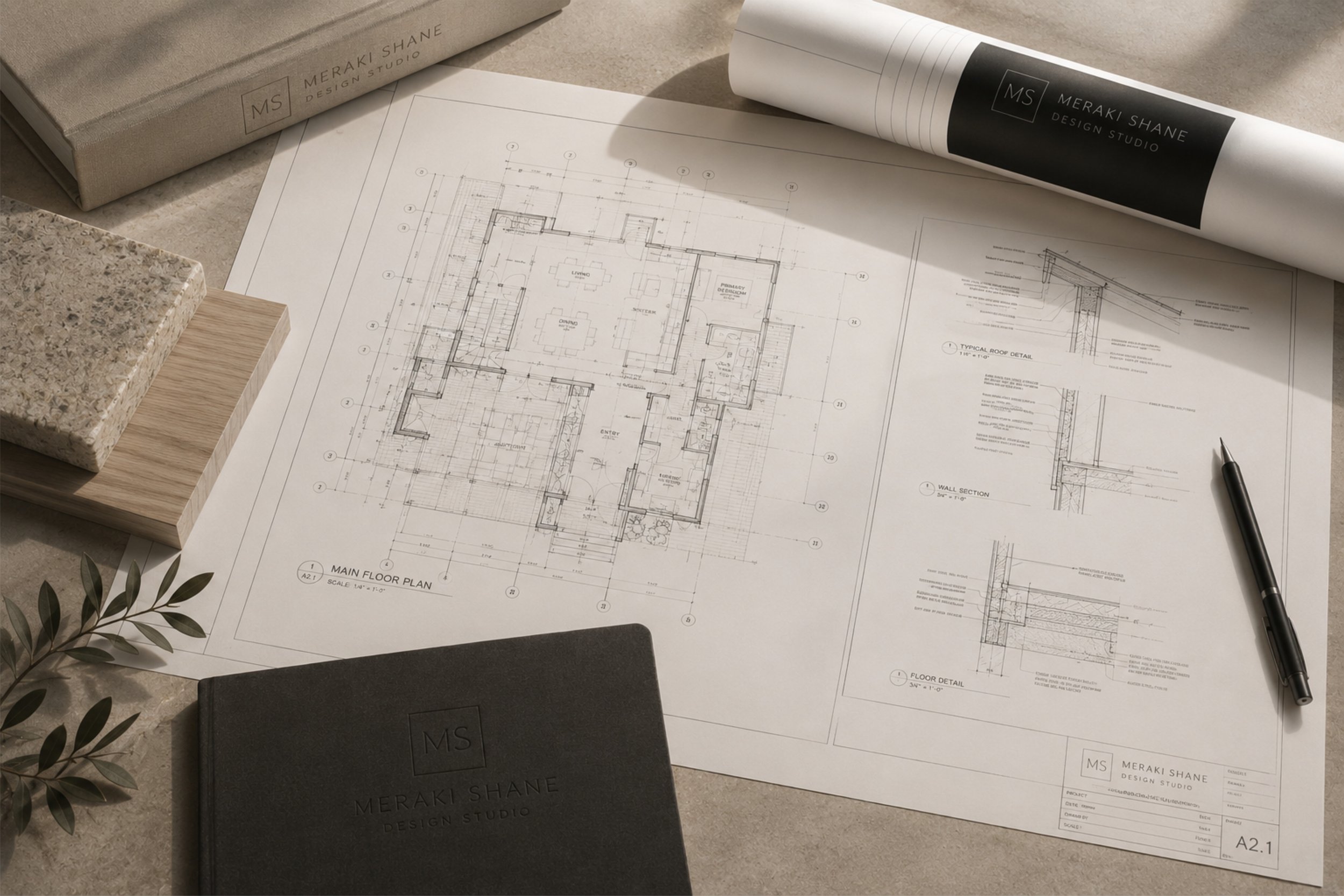
Design fees are soft costs, and like all soft costs they belong in your budget from day one. For a full-service residential design engagement — from initial concept through to permit-ready construction documentation — expect design fees to represent approximately 5 to 10 percent of your construction budget depending on the scope and complexity of the project.
That number deserves context. You are about to spend hundreds of thousands of dollars — more likely over a million — building something that will define how you live for decades. The design phase is where every decision that affects that investment gets made. It is where floor plans get tested against how you actually live. Where site conditions get resolved before they become construction problems. Where material choices get made with full knowledge of how they'll perform in BC's varied regional climates. Where the drawings get developed to a level of precision that allows your contractor to price accurately and build confidently.
Incomplete or underdeveloped drawings don't save money. They transfer the cost of unresolved decisions from the design phase — where changes cost nothing — to the construction phase, where changes cost significantly. A thorough set of drawings is not a luxury. It is budget protection.
The conversation that matters most before you set a budget
The most useful thing you can do before you commit to a budget is have an honest conversation with both your designer and your builder — ideally together, and ideally before design begins.
A builder who knows your site, your program, and your specification aspirations can give you a realistic sense of what your project is likely to cost before you've invested significantly in design. A designer who understands your budget can make decisions throughout the design process that keep the project achievable without compromising what matters most to you.
That alignment — between design vision, construction reality, and budget — is what separates projects that finish on budget and on brief from ones that don't. It doesn't happen by accident. It happens when the right people are in the room together early enough to shape the outcome.
What this means for you
If you're in the early stages of thinking about building a custom home anywhere in British Columbia, here's the most honest advice we can give you:
Don't start with a number. Start with a conversation. Understand your site. Understand what you actually want the home to feel like and how you want to live in it. Then bring a designer and a builder into the picture early enough that the budget is built around reality — not adjusted to fit a number that came from somewhere else.
The best custom homes we've been part of weren't the ones with the biggest budgets. They were the ones where the clients understood what they were investing in and why — and made decisions accordingly from the very beginning.
Meraki Shane Design Studio designs custom homes across the Okanagan, Vancouver Island, the Kootenays, the Shuswap, and throughout British Columbia. We take on a limited number of projects each year to ensure every client receives our full attention.
