
Drafter, Designer, or Architect — Which Do You Actually Need to Build a Custom Home in BC?
If you're planning to build a custom home in British Columbia, you'll quickly encounter a range of professionals offering to help you get there. Drafters. Designers. Architects. The titles can blur together, and the differences aren't always explained clearly. But for someone about to make one of the largest financial commitments of their life, understanding the distinction between a drafter and a residential designer matters more than most people realize.
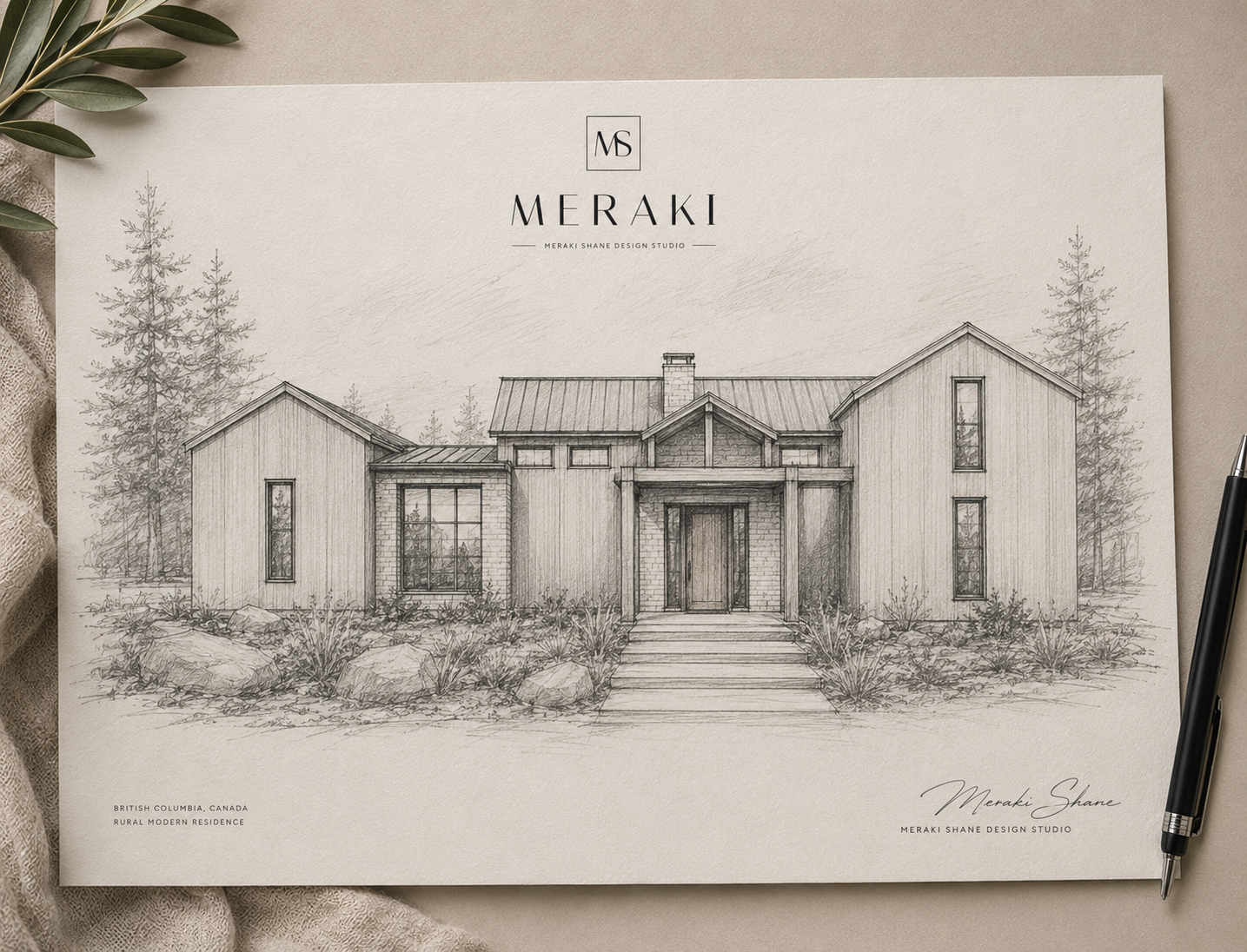
What a drafter does
A drafter is a technical professional who produces construction drawings. They take an existing idea — a sketch, a concept, a rough layout — and translate it into the technical documentation needed for permits and construction. The work requires precision, knowledge of building code, and fluency with the software and conventions of construction documentation.
It is skilled, necessary work. But it is fundamentally reactive. A drafter executes someone else's vision. They are not typically trained or engaged to question whether the floor plan serves how you actually live, whether the home is positioned correctly on the site, or whether the material palette will hold up to the specific climate you're building in. That's not a criticism — it's simply not what the role is designed to do.
If you come to a drafter with a fully resolved design, they will produce excellent drawings. If you come to them with a vision and a piece of land, you may end up with drawings that don't reflect either one as well as they could.
What a residential designer does
A residential designer starts further back in the process — and that's precisely where the value lies.
Before a single line is drawn, a residential designer is asking different questions. How do you actually live? Where do you want the light in the morning? How does this site face the sun in December versus July? What does this home need to feel like from the inside? What will it look like in thirty years — will the materials age gracefully or date badly?
The design process is generative, not just technical. It involves site analysis, spatial planning, massing studies, material direction, and a sustained conversation about how architecture can serve the specific people who will live in it. The technical documentation — the drawings, the specifications, the permit package — comes at the end of that process, not instead of it.
The difference in outcome is significant. A home that has been designed — truly designed, from first principles — feels different to live in than one that was drafted. Spaces flow intuitively. Light arrives where it should. The house sits on its land as though it belongs there. These qualities don't happen by accident and they don't come from translating a floor plan into CAD.
Why this distinction matters for your budget
There's a common assumption that hiring a drafter saves money compared to working with a designer. In some cases the upfront fee is lower. But the full picture is more nuanced.
A home that hasn't been thoroughly designed before it's documented tends to generate more questions, changes, and conflicts during construction — all of which cost money in the field. Decisions that weren't resolved at the design stage get resolved on site, where resolving them is expensive. A contractor pricing from incomplete or under-developed drawings will carry contingency to protect themselves, which shows up in your tender price.
Thorough, thoughtful design documentation reduces surprises. It keeps your contractor aligned with the vision. It protects your budget not by being cheap at the start but by being precise throughout.
What to look for when choosing who to design your home
Credentials are one signal among many — and not always the most reliable one. The portfolio tells you more. Look at the homes a designer has produced and ask yourself whether they feel considered. Whether the proportions are right. Whether the homes look like they were designed for their sites or placed on them.
Ask how they work. Do they start with your site or with a floor plan? Do they ask about how you live before they start drawing? Do they have relationships with builders and engineers, or do they hand you drawings and disappear?
The right designer for your custom home is someone whose previous work resonates with you, who asks better questions than you expected, and who treats the design phase with the seriousness it deserves. That combination — curiosity, craft, and technical precision — is what separates a home you'll love for decades from one you'll spend years wishing were different.
Meraki Shane Design Studio is a boutique residential design studio designing custom homes across the Okanagan, Vancouver Island, and throughout British Columbia. We take on a limited number of projects each year to ensure every client receives our full attention.
[View some of our featured projects→]
When an architect is required in BC
It's worth being clear about where the legal boundaries sit in British Columbia, because understanding them helps you make the right choice for your specific project.
Under BC's Architects Regulation, which came into force in February 2023, a registered architect is legally required for certain building types — specifically residential buildings with five or more dwelling units, buildings with a footprint greater than 600m² [6450sf] or a total gross floor area greater than 2,400m² [25,833sf], buildings taller than three storeys plus basement, and certain mixed-use or complex assembly buildings.
For the vast majority of custom single-family homes in BC, none of these thresholds apply.
Meraki Shane Design Studio works exclusively within the residential design scope — custom single-family homes, renovations, and additions that fall well within the parameters where residential design practice is fully appropriate. If your project falls outside that scope, we will tell you clearly and point you toward the right professional. That kind of honesty is part of how we work.
