
Custom Home Design on Vancouver Island — What You Need to Know Before You Build
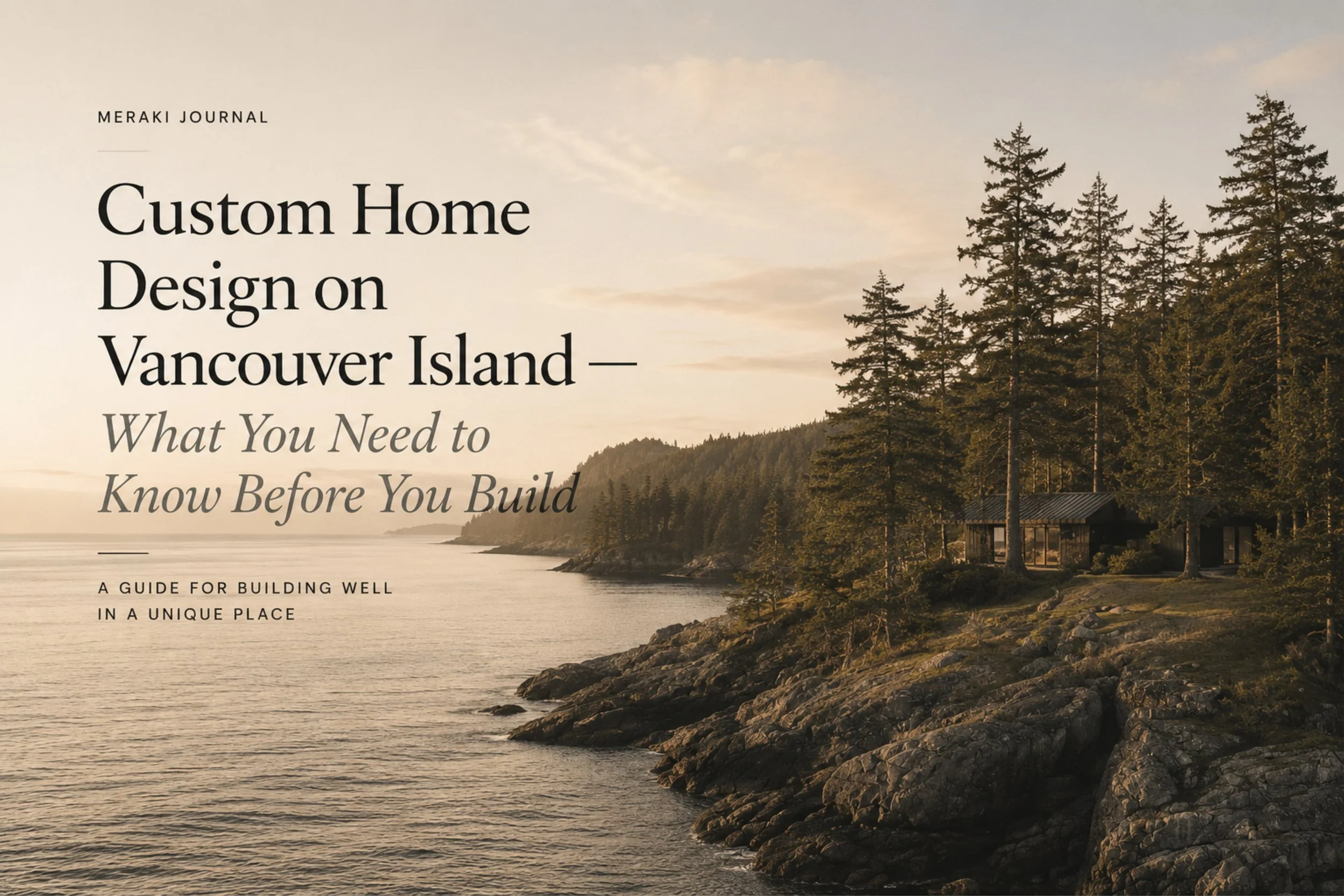
Vancouver Island is unlike anywhere else in Canada to build a custom home. The landscape is extraordinary — ancient forest, rocky coastline, ocean views, and a quality of light that shifts with the rain and the mist in ways that make every site feel cinematic. But building here comes with its own distinct set of challenges, and understanding them before you begin will shape every decision that follows.
Here's what we've learned designing custom homes across Vancouver Island.
Your site tells a different story here
[View more from this project→]
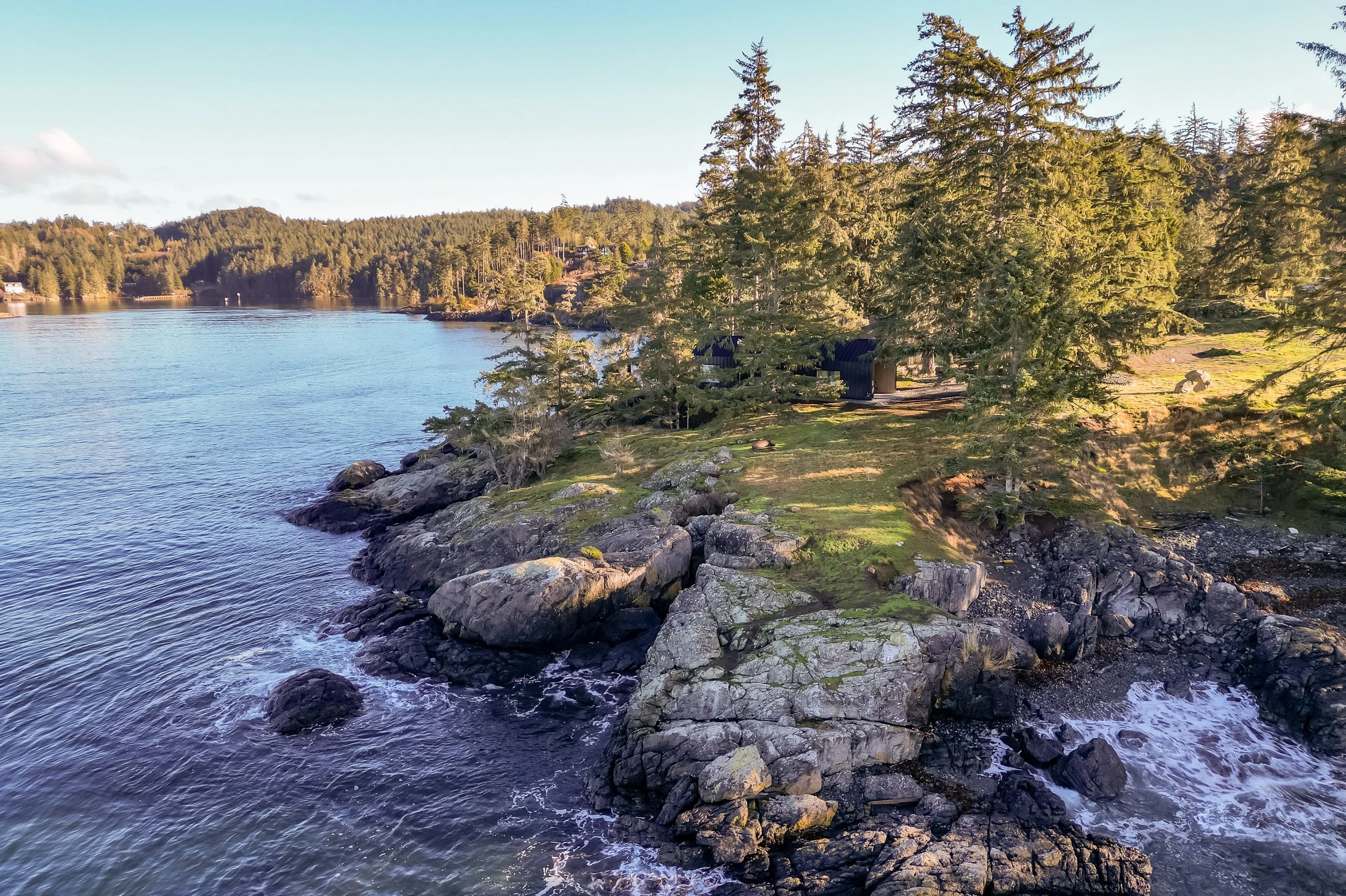
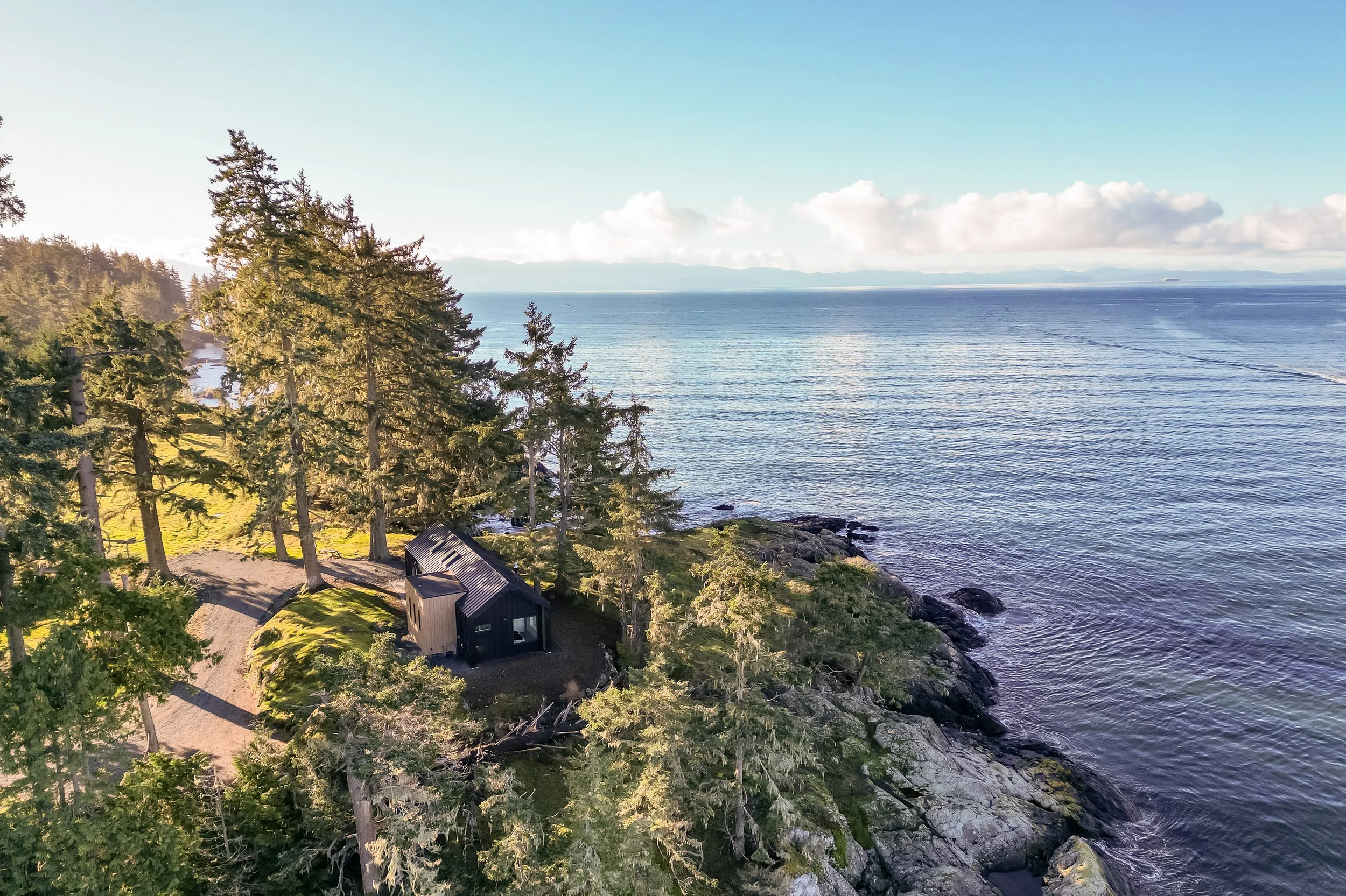
Vancouver Island sites vary dramatically — from sheltered south-facing slopes near Victoria to exposed coastal bluffs on the west coast, from dense forest properties in the Cowichan Valley to rocky outcroppings near Sooke and beyond. Each presents a completely different set of opportunities and constraints.
Before you commit to a site, understand what it's asking of you. How exposed is it to prevailing winds? Where does water move across it in a heavy rain event? How does the sun track across it in December versus July? These questions aren't details — they're the foundation of every design decision that follows.
Rainfall and moisture — design for wet, not just waterproof
The west coast of Vancouver Island receives some of the highest annual rainfall in North America. Even the drier south end of the island sees significantly more precipitation than most of BC. Moisture management isn't a finishing detail here — it's a fundamental design consideration.
Homes that perform well on the island treat water as something to be thoughtfully managed at every layer: site drainage and grading, roof geometry and overhang depth, cladding material selection, wall assembly detailing, and the relationship between indoor and outdoor living spaces. A deep covered porch isn't just a lifestyle feature on the island — it's a functional response to the climate that extends your livable space for ten months of the year.
Material choices matter enormously in a high-moisture environment. Not every product that performs beautifully in the Okanagan or on the prairies holds up to sustained west coast exposure. Cedar, zinc, weathering steel, and fibre cement each respond differently to salt air and sustained dampness. Getting material selection right early prevents costly maintenance issues down the road.
Seismic design — building for the ground beneath you
Vancouver Island sits on one of the most seismically active zones in Canada. The Cascadia Subduction Zone runs offshore, and the island experiences regular seismic activity. While most custom homes don't require specialized seismic engineering beyond standard code requirements, building in a high-risk zone means your structural engineer and your design team need to be aligned from the beginning.
This isn't a reason for alarm — it's a reason for diligence. Homes built thoughtfully within seismic zones perform well. Homes where seismic considerations were an afterthought can face significant issues. Engaging your structural engineer early in the design process, rather than at the documentation stage, makes a meaningful difference in both performance and cost.
Coastal conditions and wind exposure
For properties near the water — particularly on the exposed west coast, the Gulf Islands approaches, or elevated sites above the Strait of Georgia — wind loading is a serious design consideration. Homes on exposed coastal sites need to be designed for the actual wind conditions they'll experience, not just average conditions.
This affects everything from roof form and pitch, to window and door specifications, to how outdoor living spaces are positioned and sheltered. A beautifully designed deck that faces directly into a prevailing ocean wind is an outdoor space nobody uses. Understanding wind patterns on your specific site before design begins allows those spaces to be positioned where they'll actually be enjoyed.
Salt air also accelerates the deterioration of materials not suited to coastal exposure. Fasteners, cladding systems, windows, and hardware all need to be specified with the marine environment in mind. This is one of the areas where working with a designer who understands the island environment specifically — rather than applying mainland standards — makes a tangible difference in the long-term performance of your home.
Material availability and supply chain realities
Building on Vancouver Island, particularly outside the Victoria and Nanaimo corridors, introduces supply chain considerations that mainland projects don't face. Material lead times can be longer. Certain products readily available in Vancouver or Kelowna require additional shipping time and cost. Trades are in high demand across the island and scheduling requires more lead time than in larger urban centres.
These realities don't limit what's possible — but they make early, thorough design documentation even more important. A well-developed set of drawings allows your contractor to price accurately, order materials with appropriate lead time, and sequence the build efficiently. Incomplete documentation on an island project doesn't just create design uncertainty — it creates real logistical and financial risk.
The island building community is tight-knit — relationships matter
One of the things we've found working on Vancouver Island is that the building community here is smaller and more connected than on the mainland. Good builders are known. Good designers are known. Relationships between designers, builders, engineers, and trades matter in ways they sometimes don't in larger markets.
Coming to your project with a design team that has established relationships on the island — or is willing to invest in building them — will serve you throughout your build. The island rewards a collaborative, relationship-driven approach to construction.
Start earlier than you think you need to
Vancouver Island's combination of strong demand, limited trades availability, and longer material lead times means the timeline from design to occupancy can be longer than clients expect. The best island builds we've been part of started the design conversation early — often a full year or more before the intended start of construction.
If you're thinking about building on Vancouver Island — whether you have land already or you're still searching — the right time to reach out is now.
[Start a conversation →]
Meraki Shane Design Studio designs custom homes across Vancouver Island and throughout British Columbia. We take on a limited number of projects each year to ensure every client receives our full attention.
